How to take sizes for a whole team without mistakes
The flat-measure method, using a sample set and how to avoid the classic size swap.
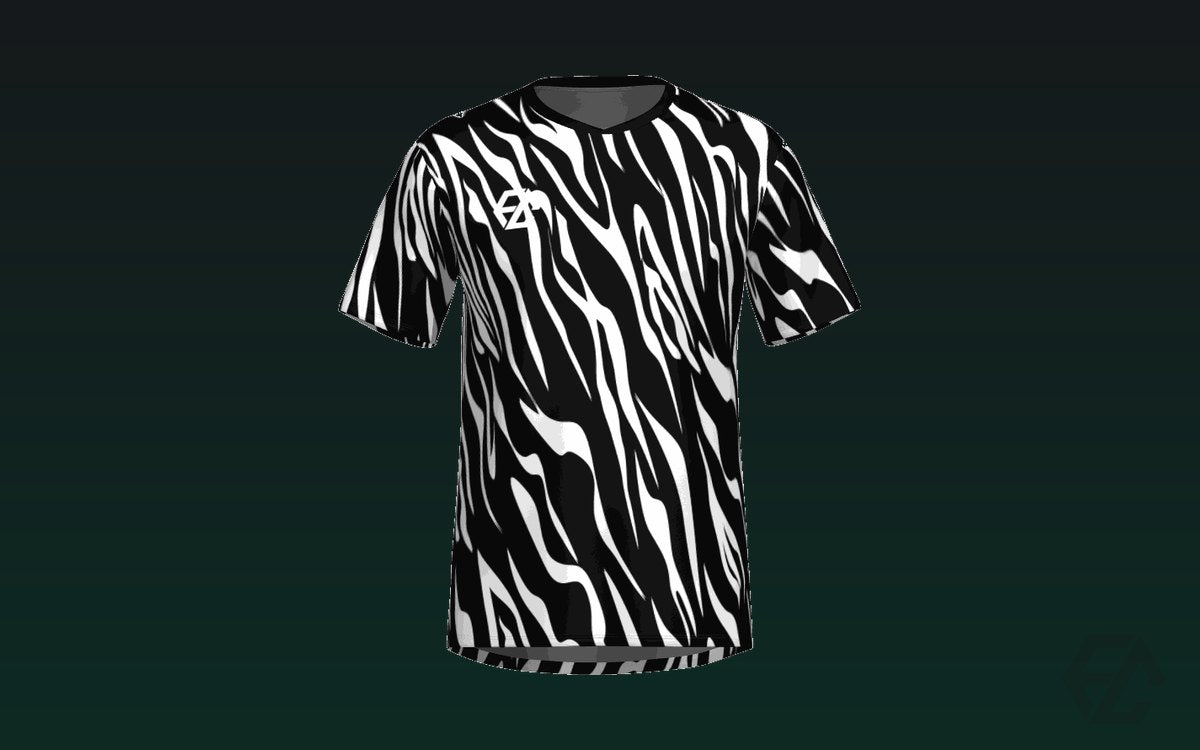
The biggest headache when kitting out a club isn't the design: it's the sizes. One bad measurement means exchanges, delays, uncomfortable players and, when it comes to customised products, a problem that's hard to undo. Here's how to do it right, step by step.
Why sizes are critical on customised products
It's worth understanding this before you start: a jersey with a player's name and number on it is made exclusively for them. It can't go back into stock or be resold. That's why, on customised products, there is no right of withdrawal (article 103.c of the TRLGDCU, the Spanish consumer law), just as with any made-to-order manufacturer.
This isn't a clause to wriggle out of anything: it's the logical consequence of making on demand. But it means the ten minutes you spend taking sizes properly save you the upset of a jersey that fits nobody else.
Measure flat, not on the body
The most reliable way isn't to measure the player: it's to take a garment that already fits them well and measure it laid flat on a table. It's quicker, more accurate and avoids arguments.
- Width: from side to side, just below the armpits, with the garment spread out but not stretched.
- Length: from the collar point down to the hem.
With those two numbers, compare against our size chart. None of "I reckon it's an M": one brand's M isn't another brand's M.
Use a sample set
For club orders, the ideal is to try on a sample set of each size. Having each player try one on and note theirs down wipes out most mistakes in one go.
Here it helps that there's no minimum order: you can get a few sample units in the middle sizes (say 10, 12, S and M) before launching the big order. It's the best-value investment of the whole season.
And the golden rule: if you're torn between two sizes, pick the larger one. A slightly loose jersey gets played in; a tight one doesn't.
Youth football: measure twice
In younger age groups there are two factors an adult team doesn't have:
- Kids grow. If you take sizes in June for a kit that will be worn from September to May, the kid will shoot up along the way. Many coordinators choose to go up a size for those on the borderline.
- Parents have opinions. And sometimes they ask for a size up "so it lasts two years". Fair enough, but it's worth warning them that a jersey that's far too big gets in the way of playing.
We work with 14 sizes, from kids' 4 up to adult 4XL, precisely so that in youth football you don't have to stretch a small adult size.
Record every player in a single list
Write down name, number and size in one single place. No loose messages in the WhatsApp group, which is where data gets lost.
In our customiser you can enter the full list of players with their sizes in one go, matching each jersey to its number automatically. Before confirming, double-check the two things that always slip through:
- That the names are spelled correctly (accents and double-barrelled surnames sneak through).
- That no numbers are repeated.
Watch out with the basic garments
The basic shorts and the socks use their own chart in cm. Check them separately: a jersey size doesn't always match the same shorts size. It's a classic mistake to assume that whoever wears an M jersey wears M shorts.
The ultimate trick: let everyone pick their own
If you want to kill the problem at the root, stop taking sizes yourself. With a Team Store, each family enters the club's store with its code, picks their size and pays their share. The coordinator stops being responsible for a piece of data they don't control, and whoever gets it wrong is whoever chose it.
Quick recap
- Measure a garment that already fits, laid flat, width and length.
- Compare against the official chart, not your gut feeling.
- Order samples of the middle sizes before the big order.
- If in doubt, go larger. With kids, factor in growth.
- One single list with name, number and size.
- Check names and numbers before approving the design.
Do that, and the day the box arrives at the changing room will be a celebration, not an afternoon of complaints.